Andrew Motion

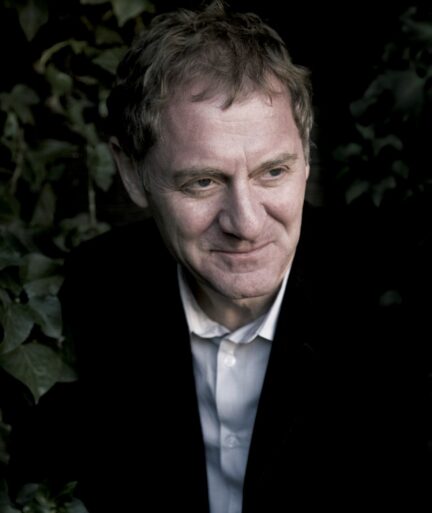
Andrew Motion is professor of creative writing at Royal Holloway College, University of London, and co-founder of the online Poetry Archive. He has received numerous awards for his poetry, and has published four celebrated biographies. His group study The Lamberts won the Somerset Maugham Award and his authorized life of Philip Larkin won the Whitbread Prize for Biography. Motion was knighted in the United Kingdom for his services to poetry in 2009.

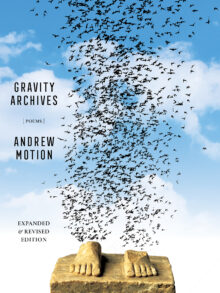
Gravity Archives

Poems: Expanded and Revised Edition

Gravity Archives, Revised and Expanded for North American Readers, is a Remarkable Contemplation of Departure and Return

Andrew Motion’s new collection gives a moving account of the friction and interplay between past and present. In the opening elegies for friends and former versions of the self, and in the long title sequence which completes the book, he explores the ways in which regrets compete with hope, and the appetite for life is always a prey to hard facts of mortality. The energy and reach of these poems opens a new chapter in Motion’s writing, remaining true to the elegiac subjects which have always been his main concern, while adding new depths of pathos and resonance. Gravity Archives has been revised and expanded for the North American edition in the Pitt Poetry Series (2027).

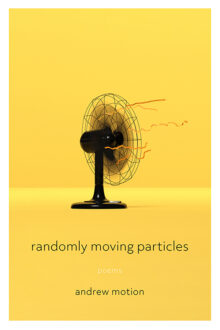
Randomly Moving Particles

Randomly Moving Particles is built from two long poems that form its opening and close, connected by three shorter pieces. The title poem, in a kaleidoscope of compelling scenes, engages with subjects that include migration, placement, loss, space exploration, and current British and American politics. It is a clarifying action and reaction between terra and solar system, mundanity and possibility, taking us from the grit of road surfaces to the distant glimpses of satellites. The final poem, “How Do the Dead Walk,” combines mythic reach with acute observation of the familiar, in order to address issues of contemporary violence. It is altogether more dreamlike, even in its tangibly military moments, grasping as it does at phantoms and intermediate plains.

Andrew Motion’s expansive new poetry collection is direct in its emotional appeal and ambitious in its scope, all while retaining the cinematic vision and startling expression that so freshly lit the lines of his last, Essex Clay.