David P. Demarest (1931–2011) was professor emeritus of English at Carnegie Mellon University and a pioneering scholar of labor history and working-class literature of western Pennsylvania. His research led to the republication of Thomas Bell’s seminal novel of the American steel industry, Out of This Furnace. He was a founding member of the Battle of Homestead Foundation and a staunch advocate for the preservation of important local historical and cultural landmarks such as the Braddock Carnegie Library in Braddock, Pennsylvania, and the Maxo Vanka murals in Saint Nicholas Croatian Catholic Church in Millvale, Pennsylvania.
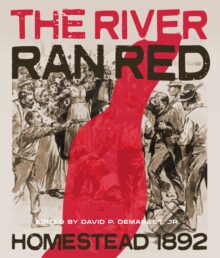
On July 6, 1892, violence erupted at the Carnegie Steel mill in Homestead, Pennsylvania, when striking employees and Pinkerton detectives hired to break the strike exchanged gunfire along the shore of the Monongahela River. The skirmish left some dozen dead, led to a congressional investigation, sparked a nearly successful assassination attempt on Carnegie Steel executive Henry Clay Frick, and altered the course of the American labor movement. The River Ran Red recreates the events of that summer using firsthand accounts and archival material, including excerpts from newspapers and magazines, reproductions of pen-and-ink sketches and photographs made on the scene, passages from the congressional investigation, and poems, songs, and sermons from across the country. Contributions by outstanding scholars provide the background for understanding the social and cultural aspects of the strike, as well as its violence and repercussions. Written to commemorate the hundredth anniversary of the strike, The River Ran Red records and contextualizes public and personal reactions to one of the most important events in labor history, the reverberations of which are still felt today.
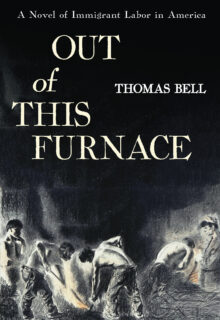
Out of This Furnace is Thomas Bell’s most compelling achievement. Its story of three generations of an immigrant Slovak family — the Dobrejcaks — still stands as a fresh and extraordinary accomplishment.
The novel begins in the mid-1880s with the naive blundering career of Djuro Kracha. It tracks his arrival from the old country as he walked from New York to White Haven, his later migration to the steel mills of Braddock, Pennsylvania, and his eventual downfall through foolish financial speculations and an extramarital affair. The second generation is represented by Kracha’s daughter, Mary, who married Mike Dobrejcak, a steel worker. Their decent lives, made desperate by the inhuman working conditions of the mills, were held together by the warm bonds of their family life, and Mike’s political idealism set an example for the children. Dobie Dobrejcak, the third generation, came of age in the 1920s determined not to be sacrificed to the mills. His involvement in the successful unionization of the steel industry climaxed a half-century struggle to establish economic justice for the workers.
Out of This Furnace is a document of ethnic heritage and of a violent and cruel period in our history, but it is also a superb story. The writing is strong and forthright, and the novel builds constantly to its triumphantly human conclusion.