Nicholas B. Breyfogle is professor of history and Director of the Harvey Goldberg Center for Excellence in Teaching at The Ohio State University. He is the author of Heretics and Colonizers: Forging Russia’s Empire in the South Caucasus (2005), which was awarded the Ohio Academy of History Outstanding Publication Award, 2006; and editor or coeditor of Hydraulic Societies: Water, Power, and Control in East and Central Asian History (with Philip C. Brown, 2023); Place and Nature: Essays in Russian Environmental History (2021); Nature at War: American Environments and World War II (2020); Readings in Water History (2020); Eurasian Environments: Nature and Ecology in Imperial Russian and Soviet History (2018); and Peopling the Russian Periphery: Borderland Colonization in Eurasian History (2007). He is also the recipient of the Herbert Feis Award for Distinguished Contributions to Public History from the American Historical Association.
Bodies of water have played myriad roles in human history—as cultural landmarks, foundation myths and origin stories, symbols of identity, sources of political legitimacy, and as ways of constructing shared values. Focusing on the rivers, lakes, glaciers, and seas of Eurasia—including China, Japan, Korea, Vietnam, Central Asia, the tsarist empire, and the Soviet Union—Fluid Worlds investigates water’s role in human culture, from the fourteenth century to the twenty-first. As the authors of this edited collection show, political authority, social status, and cultural importance have been core categories for producing knowledge about water. Ultimately, how humans think about and assign value to water affects the actions they take to try to control, transform, or move it, from hydroelectric dam building to waterscape conservation. Today, as the world population grows, water supplies are polluted, glaciers melt, sea levels rise, and aquifers deplete, we face profound ethical and ideological questions about managing the world’s water. Lessons from the historical relationships between human culture and water will take on increasing relevance as we consider how to answer these questions to shape our future.

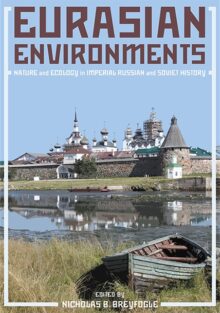
Through a series of essays, Eurasian Environments prompts us to rethink our understanding of tsarist and Soviet history by placing the human experience within the larger environmental context of flora, fauna, geology, and climate. This book is a broad look at the environmental history of Eurasia, specifically examining steppe environments, hydraulic engineering, soil and forestry, water pollution, fishing, and the interaction of the environment and disease vectors. Throughout, the authors place the history of Imperial Russia and the Soviet Union in a trans-chronological, comparative context, seamlessly linking the local and the global. The chapters are rooted in the ecological and geological specificities of place and community while unveiling the broad patterns of human-nature relationships across the planet. Eurasian Environments brings together an international group scholars working on issues of tsarist/Soviet environmental history in an effort to showcase the wave of fascinating and field-changing research currently being written.