History / Europe / France

Total 5 results found.

Atlantic Unbound

Atlantic Unbound

Architecture in the World of the Haitian Revolution
In Atlantic Unbound, Peter Minosh examines neoclassical architecture within the Atlantic World—a site of colonialism, resource extraction, commodity circulation, capital, and slavery spanning Europe, North America, and the Caribbean in the eighteenth and nineteenth centuries. Minosh focuses on France during the expansion of its colonial empire and the French ...
The City in the Shadow of the Shantytown

The City in the Shadow of the Shantytown

A Critical History of the Bidonville
Architects, politicians, and planners have repeatedly framed shantytowns or slums as aberrant, unplanned developments that stand apart from the city proper, rather than integral components of the urban landscape with their own layered histories and often unrealized potentials. Describing a site as a bidonville––the francophone equivalent of the shantytown––...
Paris After Haussmann

Paris After Haussmann

Living with Infrastructure in the City of Light, 1870–1914
Modern Paris is often hailed as a capital of urban infrastructure. Baron Georges-Eugène Haussmann’s rebuilding of Paris in 1853–1870, branded “Haussmannization,” helped define urban modernity for cities worldwide. But even as infrastructures expanded and modernized, some Parisians were left behind: as late as 1928, 18 percent of houses still lacked direct ...
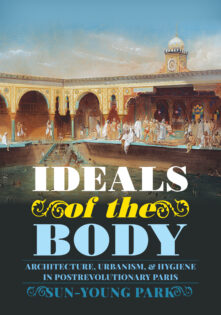
Ideals of the Body

Ideals of the Body

Architecture, Urbanism, and Hygiene in Postrevolutionary Paris
Modern hygienic urbanism originated in the airy boulevards, public parks, and sewer system that transformed the Parisian cityscape in the mid-nineteenth century. Yet these well-known developments in public health built on a previous moment of anxiety about the hygiene of modern city dwellers. Amid fears of national decline that accompanied ...
Ambivalent Alliance

Ambivalent Alliance

The Catholic Church and the Action Française, 1899-1939
Ambivalent Alliance convincingly defends several provocative insights into a key period in the history of French Catholicism. It investigates the strange marriage of convenience, from 1899 to 1939, between the French church and the ultra-rightist, chauvinist, monarchist, and anti-Semitic organization called the Acton Française, and raises many disturbing questions. Why did ...

Total 5 results found.