Ira J. Allen is associate professor of English and of politics and international affairs at Northern Arizona University. He is the author of two books, including The Ethical Fantasy of Rhetorical Theory.
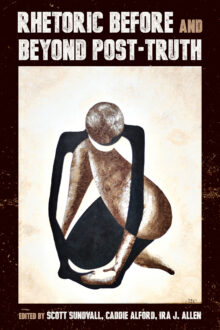
Rhetoric has long had a contentious relationship with the idea of truth, and the field of contemporary rhetorical studies has often been skeptical of easy understandings of truth. Meanwhile, hostility to truth is doing a lot of real-world damage, even if truth itself may never have been completely reliable. The idea of post-truth poses systemic problems for rhetoric’s traditional concerns. Active obfuscation, negation of truth, and even truth-indifference are certainly not new. But the past couple of decades have seen a proliferation and pervasiveness of falsities, rendering the term “post-truth” an identifiable marker of the contemporary moment. Public life regularly provides examples of both post-truth in action and efforts to combat it by invoking truth. In Rhetoric Before and Beyond Post-Truth,a range of English, communications, philosophy, and political science scholars draw on the resources of rhetoric to understand this moment, how truth has functioned in the past, and how it may continue to function when it is no longer accepted.

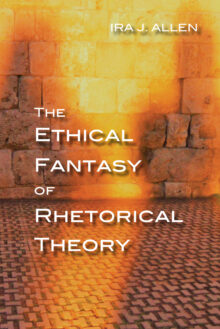
Despite its centrality to its field, there is no consensus regarding what rhetorical theory is and why it matters. The Ethical Fantasy of Rhetorical Theory presents a critical examination of rhetorical theory throughout history, in order to develop a unifying vision for the field. Demonstrating that theorists have always been skeptical of, yet committed to “truth” (however fantastic), Ira Allen develops rigorous notions of truth and of a “troubled freedom” that spring from rhetoric’s depths. In a sweeping analysis from the sophists Aristotle, and Cicero through Kenneth Burke, Chaïm Perelman and Lucie Olbrechts-Tyceta, and contemporary scholars in English, communication, and rhetoric’s other disciplinary homes, Allen offers a novel definition of rhetorical theory: as the self-consciously ethical study of how humans and other symbolic animals negotiate constraints.