
The Glass House Boys of Pittsburgh

Law, Technology, and Child Labor

Succeeds at re-creating the world of children who earned meager wages by assisting men in the production of bottles. Simply fleshing out their experiences would be a triumph. Fortunately, 'The Glass House Boys of Pittsburgh' has bigger ambitions, as it considers definitions of childhood, the physical and political contours of work, and the logic and practice of reform.
Journal of American History

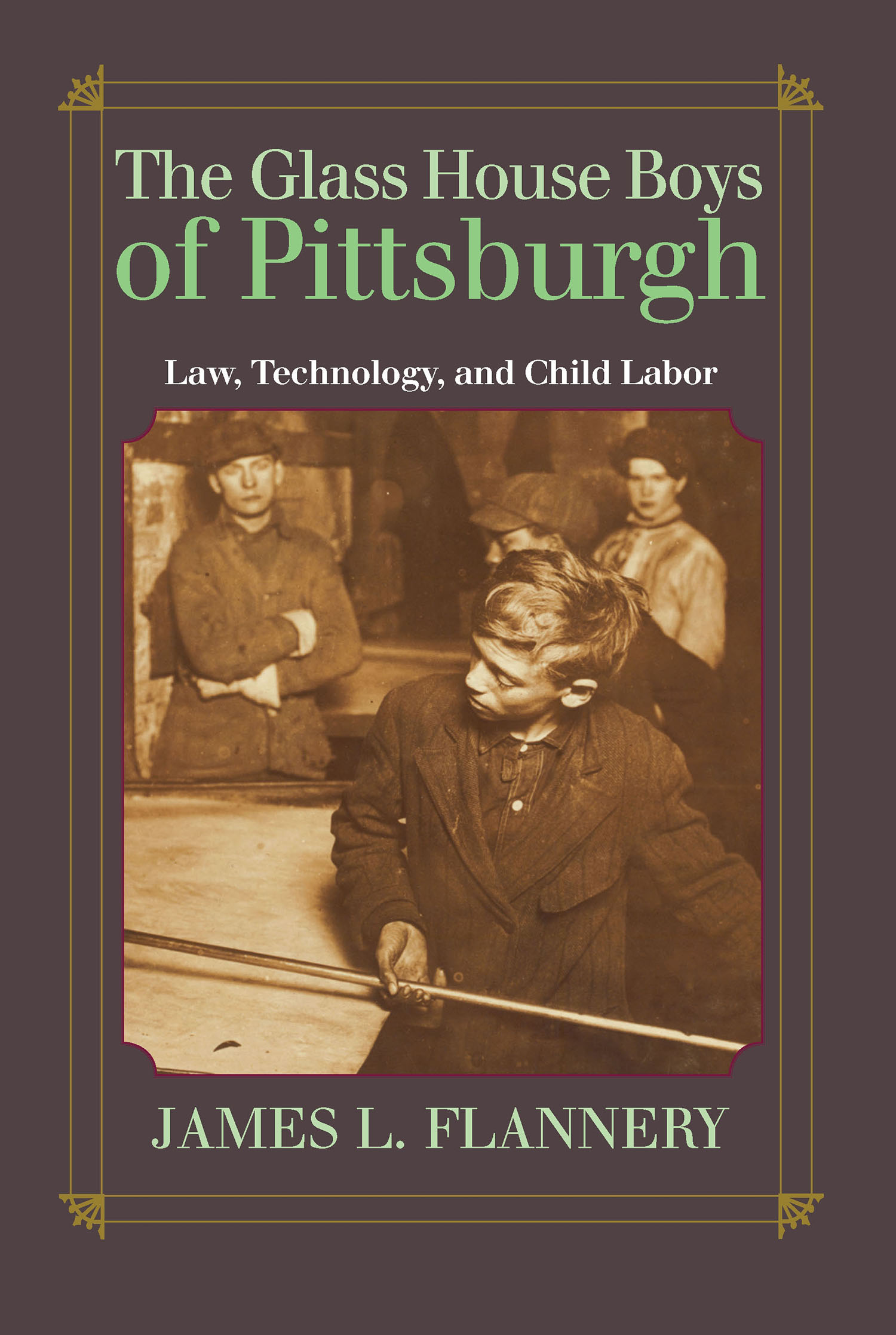
At the end of the nineteenth century, Pittsburgh led the nation in glass production. Glass bottle plants relied heavily on adolescent boys for their manufacturing process. These “glass house boys” worked both day and night, as plants ran around the clock to meet production demands and remain competitive with their newly automated rivals. The boys performed menial tasks, received low wages, and had little to say on their own behalf.
By the turn of the century, most states had greatly reduced the use of children in industry, but Pennsylvania lawmakers lagged behind. In The Glass House Boys of Pittsburgh, James L. Flannery presents an original and compelling examination of legislative clashes over this singular issue. Through extensive research in Pennsylvania state legislature archives, National Child Labor Committee reports, and union and industry journals, Flannery uncovers a complex web of collusion between union representatives, industrialists, and legislators that kept child labor reform at bay despite national pressure, a concerted effort by reformers, and changes to education laws.

about the author

James L. Flannery

James L. Flannery (1949–2023) was a professor at the University of Pittsburgh School of Law.

learn more
James L. Flannery