
Request Exam or Desk Copy. Request Review Copy
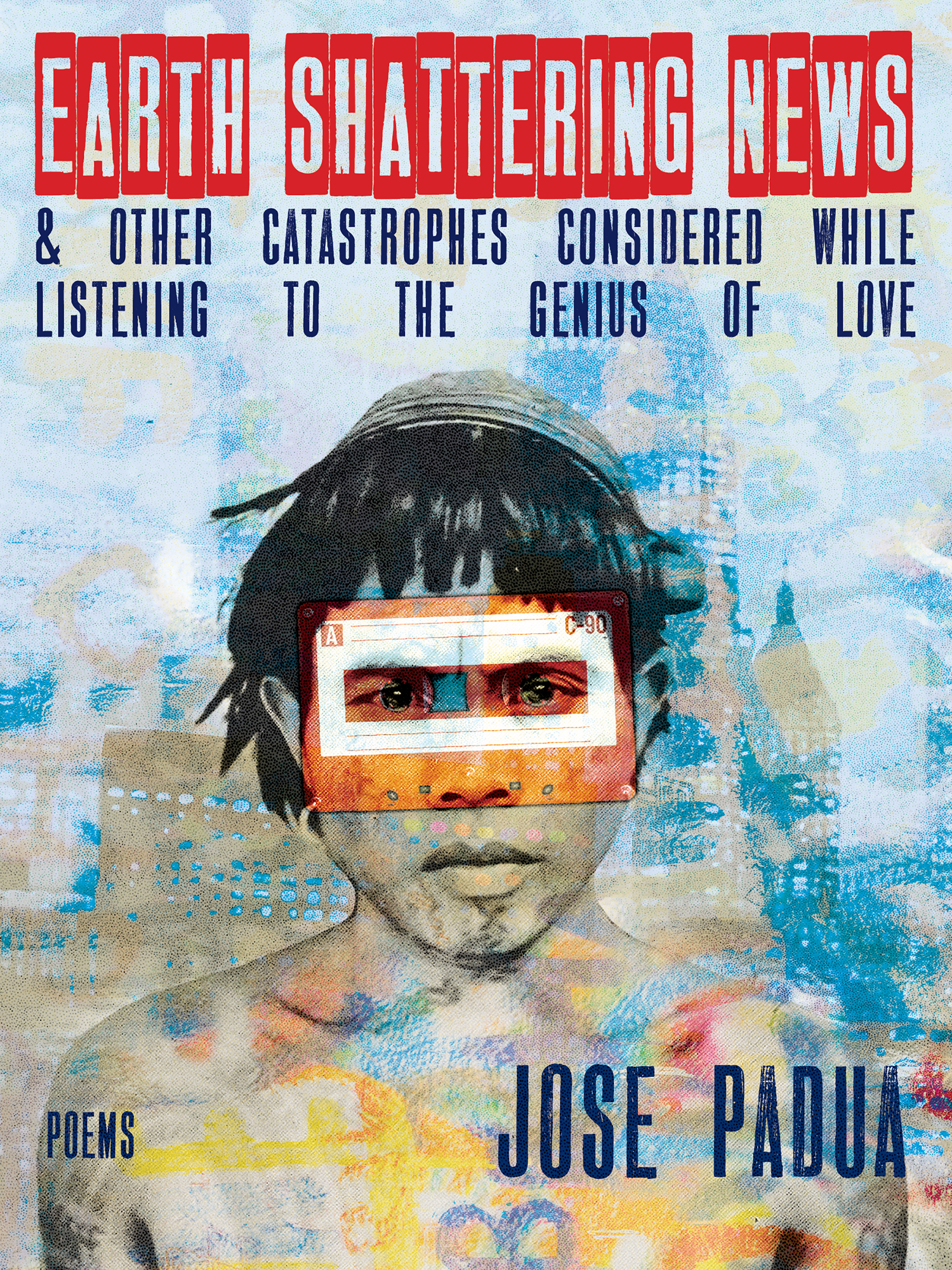
Earth Shattering News and Other Catastrophes Considered While Listening to the Genius of Love
Poems
José Padua’s wonderful poetry conjures up a unique world where the ridiculous and profound are confused for one another. He fuses Frank O’Hara’s acerbic charm, Bukowski’s grumpy cynicism, Whitman’s long breath, Iggy Pop’s agitpop, and Roland Barthes’s poetic semiotics to evoke a voice that glides between the ecstatic mundane and catastrophic global, righteous concern and between detached bemusement, indignation, and wonderment. Highly recommended for the unwillingly disaffected—and everyone else as well.
about the author

Jose Padua’s manuscript, A Short History of Monsters, was chosen by Billy Collins as the winner of the 2019 Miller Williams Poetry Prize and was published by the University of Arkansas Press. He identifies as Filipino-American neurodivergent. His poetry, fiction, and nonfiction have appeared in Bomb, Salon, Air/Light, Exquisite Corpse, Poetry Daily, Verse Daily, Northwest Review, Up is Up, but So Is Down: New York’s Downtown Literary Scene, 1974-1992, and many other journals and anthologies, including Best American Poetry 2025. He’s written features and reviews for NYPress, Washington City Paper, the Brooklyn Rail, and the New York Times and read his work at the Lollapalooza Festival, CBGBs, the Knitting Factory, the Public Theater, the Living Theater, the Split This Rock poetry festival, the Nuyorican Poets’ Café, the St. Mark’s Poetry Project, the Washington Project for the Arts, and many other venues. A stay-at-home dad, he lives in Lancaster, PA with his wife, the poet Heather L. Davis, and their daughter and son.
learn more