
Request Exam or Desk Copy. Request Review Copy
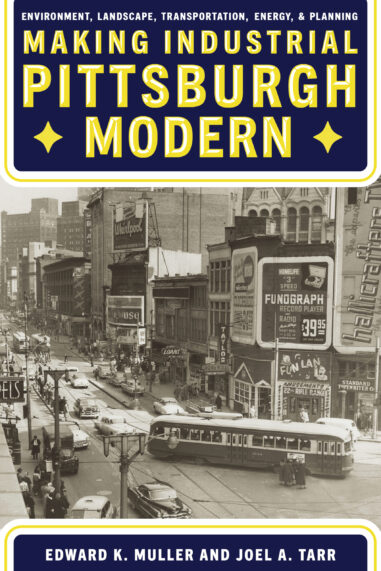
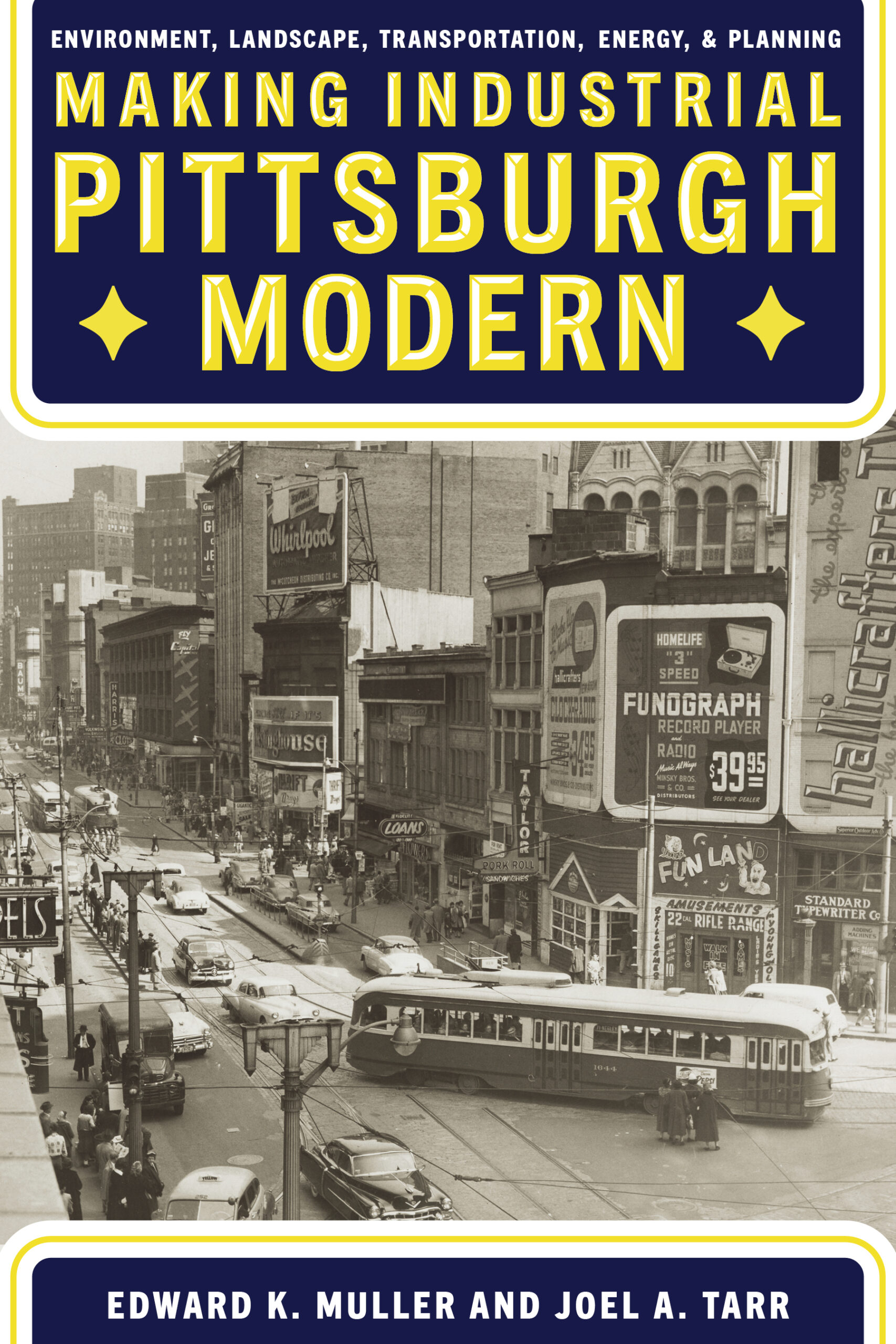
Making Industrial Pittsburgh Modern
Environment, Landscape, Transportation, Energy, and Planning
This book is highly recommended. The case studies are rich and meaningful, demonstrating lessons to be learnt from past fallacies and how legacies of environmental neglect will impact future decision making.
about the authors

Edward K. Muller is professor emeritus of history at the University of Pittsburgh and former director of the university’s Urban Studies Program. He focuses on the history and geography of North American cities, particularly Pittsburgh. He is coauthor of Pittsburgh Rising: From Frontier Town to Steel City, 1750–1920; Making Industrial Pittsburgh: Environment, Landscape, Transportation, Energy, and Planning; and Before Renaissance: Planning in Pittsburgh, 1889–1943; and editor of An Uncommon Passage: Traveling through History on the Great Allegheny Passage Trail and DeVoto’s West: History, Conservation, and the Public Good, among other books.
learn more
Joel A. Tarr is Richard S. Caliguiri University Professor Emeritus of History and Policy at Carnegie Mellon University. He is the recipient of the Leonardo da Vinci Medal from the Society for the History of Technology and both the Distinguished Service Award and the Distinguished Scholar Award from the American Society for Environmental History. He is the author, coauthor, or coeditor of Technology and the Rise of the Networked City in Europe and America, with Gabriel Dupuy; The Search for the Ultimate Sink: Urban Pollution in Historical Perspective; Devastation and Renewal: An Environmental History of Pittsburgh and Its Region; and The Horse in the City: Living Machines in the 19th Century, with Clay McShane.
learn more