A well-written biography that will persuade Wilson’s admirers to revisit his plays and introduce his work to a new generation of fans.
Request Exam or Desk Copy. Request Review Copy
Listed in Pioneer Press (Minneapolis-St. Paul) Most Anticipated of 2026
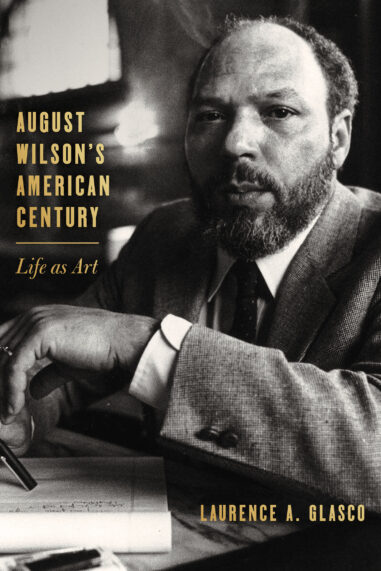
Playwright August Wilson is best known for his American Century Cycle, a sequence of ten plays—including the Pulitzer Prize–winning Fences and The Piano Lesson—that chronicle the lives of Black Americans in each decade of the twentieth century. But behind the celebrated plays stands a complex man shaped by his hometown’s vibrant Black culture. In August Wilson’s American Century: Life as Art, Laurence A. Glasco, one of the foremost historians of Black life in Pittsburgh, draws on Wilson’s early poetry, archival material, and original interviews with family members, neighbors, and friends to show how the city and its residents shaped the playwright and his work. Wilson’s overlapping identities as an outsider, warrior, race man, and poet helped him persevere in the face of setbacks, weave real-life observations with his poetry to craft memorable dialogue and compelling characters, and portray the realities of race in America in ways that have resonated with theatergoers and readers ever since. Glasco uncovers the story of how the people and places of Pittsburgh remained with Wilson after he left his hometown, shining through in a body of work that brought the struggles and triumphs of the Black experience to a wide audience and changed American theater for the better.

Glasco offers a fascinating look at one of the greatest U.S. playwrights and his roots in Pittsburgh’s Hill District. August Wilson’s story is brought to life via interviews and historical discoveries that show how deeply place and identity shaped his art. Glasco explores Wilson’s life as a fighter, poet, and voice of his community and connects these different facets of Wilson to the themes that run through his famous plays. Wilson’s love affair with words did not start in a classroom but at the Carnegie Library of Pittsburgh, where he spent hours devouring poetry—a striking fact, given that he had dropped out of school as a teen, frustrated by a system that didn’t value him. Libraries gave him back his voice. More than a biography, this is a story about how art, history, and community intersect. Glasco shows readers how the daily struggles, music, and resilience of the Hill District in Pittsburgh became the heartbeat of Wilson’s plays, in a volume that will appeal to a wide audience beyond students, theater lovers, and Wilson fans.
Historian Glasco meticulously chronicles the life of 20th-century playwright August Wilson through the prism of his home city.... Drawing on interviews with Wilson’s former neighbors, classmates, and relatives, Glasco paints a richly detailed portrait of how the playwright’s relationship to his home—as both native son and outsider—shaped the settings and thematic preoccupations of his plays. It’s a fresh angle on the oeuvre of a preeminent American dramatist.
The life of the Pulitzer Prize-winning playwright August Wilson—known for his nuanced portrayal of Black American lives in each decade of the 20th century—is brought to life in Glasco’s biography. Through early poetry, archival materials, and interviews with people who knew Wilson intimately, we see the many aspects of Wilson’s life that made him an icon within the American literary canon.
The world knows how August Wilson mythologized the Hill District of Pittsburgh, but far less about how that city shaped America’s greatest Black playwright. Drawing on decades of archival research and scores of original interviews, historian Laurence A. Glasco has now given the definitive biographical answer to that question. Glasco’s study of how Wilson’s early life in Pittsburgh shaped his outlook as an ‘outsider, warrior, race man, and poet’ is full of fascinating personal details—and sheds invaluable light on the timeless art that Wilson went on to create.
August Wilson’s American Century is a beautiful and moving portrait of the life and legacy of one of the most talented American playwrights of the twentieth century. Historian Laurence A. Glasco masterfully charts Wilson’s journey, demonstrating how the city of Pittsburgh fundamentally shaped his life and work. Drawing insights from an array of original research materials, including interviews with Wilson’s close friends and family, Glasco weaves a compelling narrative that captures the dynamic interplay of race, place, and identity.
In this major addition to August Wilson studies, Laurence A. Glasco reveals—as no biographer has done before—the intertwined, deeply embedded yet paradoxical connections between the playwright, his art, and the sometimes-fraught relationship with Pittsburgh and its Hill District neighborhood. Glasco calls upon his decades-long expertise as a respected historian and documentarian to situate Wilson squarely within the Pittsburgh landscape that shaped him—its institutions, familiar streets, and the people. Beyond being Wilson’s birthplace or serving as the metaphorical backdrop for the narratives that unfold in nine of his American Century Cycle plays, the Pittsburgh that Glasco portrays in this important study masterfully affirms the power of its place in Wilson’s magnum opus. Amid competing biographies and a plethora of scholarship, this study provides a clearer view of August Wilson from the ground—that is, from someone who has done the work and deeply understands the Pittsburgh landscape, the man, his family, his associates and the locals who sometimes make their way into one or more of his plays.
Laurence A. Glasco has written a painstakingly researched book about playwright August Wilson, highlighting the city of Pittsburgh’s significance in Wilson’s plays and, more importantly, in his life. August Wilson’s American Century: Life as Art is among the most significant contributions to Wilson studies to date. Glasco guides readers on a detailed journey through Wilson’s life—from beginning to end—revealing a complete person whose life extended beyond his role as a playwright.
Laurence A. Glasco crafts a vivid portrait of August Wilson’s early world. Grounded in Pittsburgh’s Hill District, August Wilson’s American Century follows the playwright’s roots, relationships, and self-formation with clarity and depth. Centering place as catalyst, Glasco reveals how Wilson’s artistry emerged through memory, migration, ancestral currents, and everyday experience.
August Wilson belongs among Shakespeare, Goethe, and Ibsen as one of the great playwrights of all time. Laurence A. Glasco has uncovered the life and labor behind the art. In August Wilson’s American Century, we witness the writer as a Pittsburgh boy exploring the library and playing baseball, a young poet exploring his Black identity in the 1960s, and a playwright drinking coffee and smoking in Seattle coffee shops as, against all odds, he writes another award-winning Broadway hit. Glasco has expanded the scholarship on Wilson to include missing pieces from Pittsburgh, his youth, and his place among Black intellectuals. A lively must-read for anybody interested in Wilson, Pittsburgh, or the American stage.
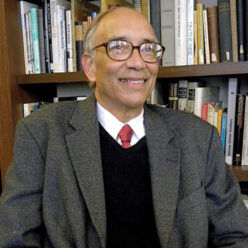
Laurence A. Glasco is professor emeritus of history at the University of Pittsburgh. He is the author or coauthor of five books, including August Wilson: Pittsburgh Places in His Life and Plays (with Christopher Rawson).
learn more