
Paperback $35.00
Also available in Hardcover
Request Exam or Desk Copy. Request Review Copy
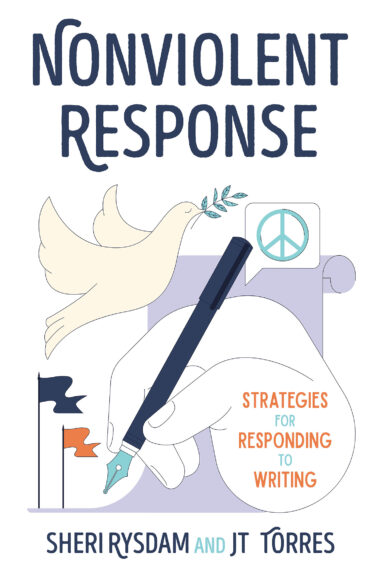
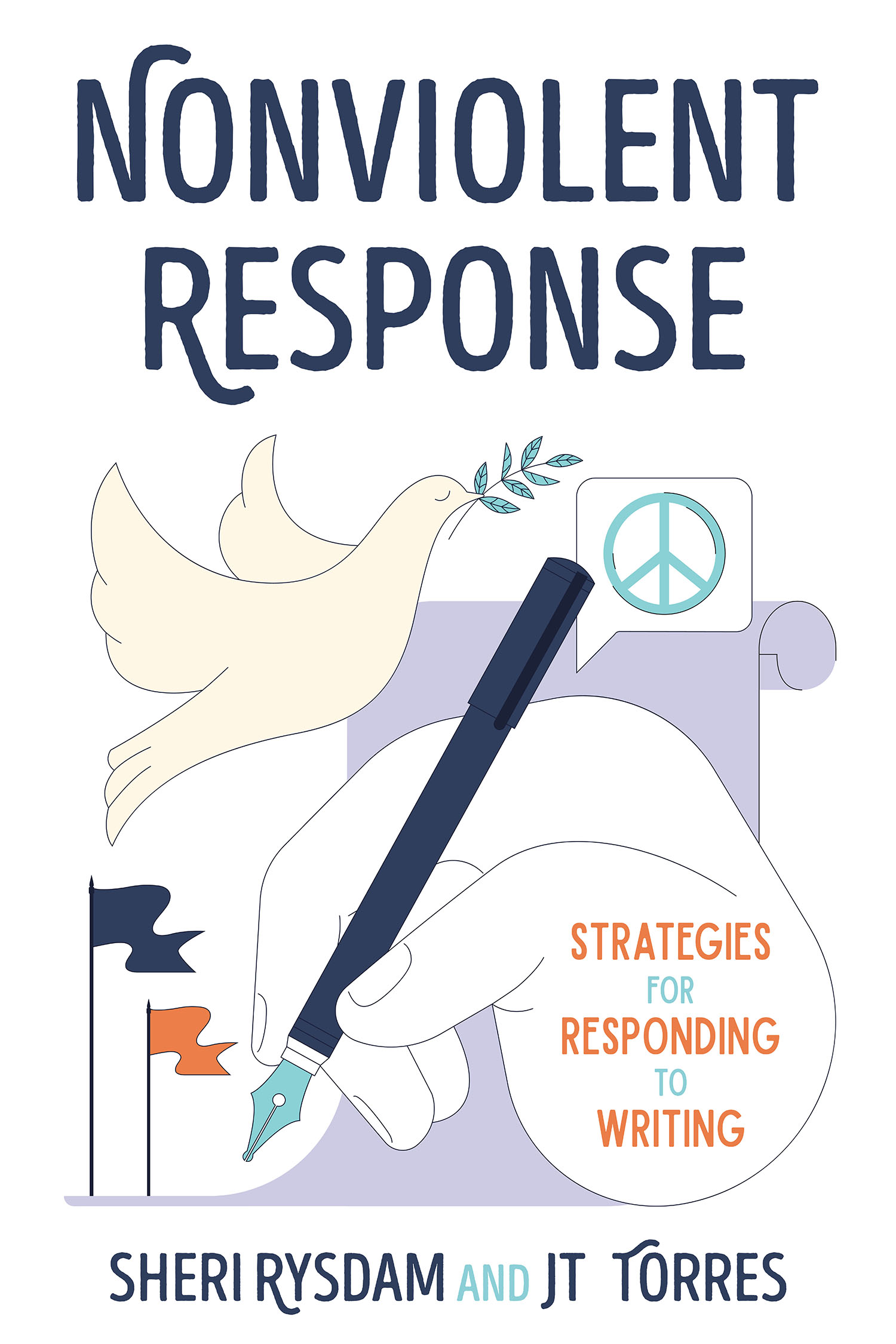
Nonviolent Response
Strategies for Responding to Writing
Drawing on Indigenous theories of listening, connectedness, and equality, Sheri Rysdam and JT Torres offer a model of nonviolent response with powerful implications for teachers and others committed to empathetic engagement with writing. Striking the perfect balance between theory and practice, the book makes a compelling case for this approach to response, and its reflective prompts equip readers to undertake this valuable work.
about the authors

Sheri Rysdam is professor in English/Writing and director of the Writing Center at Eastern Oregon University. She is also author of The Doula Dialectic: Feminist Rhetorics for Childbirth.
learn more

JT Torres is director of the Houston H. Harte Center for Teaching and Learning at Washington and Lee University. He is the coeditor of How to Incorporate Equity and Justice in Your Teaching and the coauthor of How to Use Writing for Teaching and Learning and the arts-based ethnography Situated Narratives and Sacred Dance: Performing the Entangled Histories of Cuba and West Africa.
learn more