
Request Exam or Desk Copy. Request Review Copy
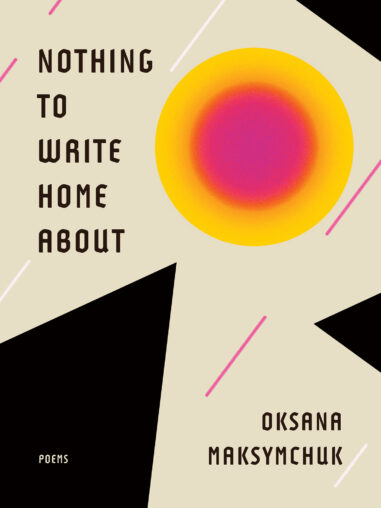
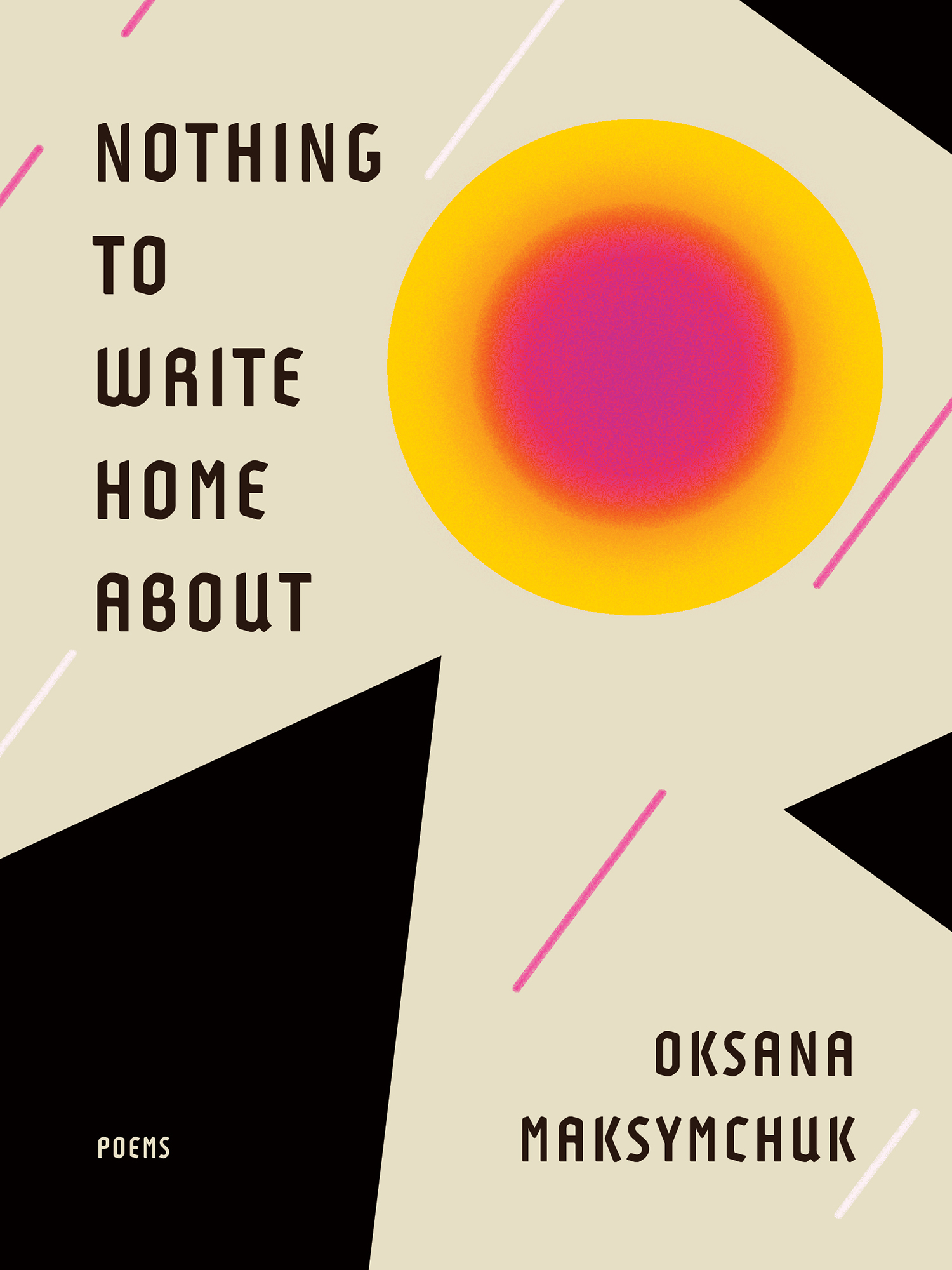
Nothing to Write Home About
Poems
Life does not seem real in war, Oksana Maksymchuk tells us, and neither does home. Yet in this world there is nothing more real than this state of the unreal. ‘Nothing,’ as the title of the book tells us, is a subject. Nothing is language and it is madness. It is, in these poems, the act of trying to breathe and speak amid massacre and occupation. It is the digital map that empties our lives and languages. And somehow, as Maksymchuk writes, there is ‘this thorny matter of surviving.’ Nothing to Write Home About subtly attends to the most unsubtle details of war. It’s a powerful achievement, a document of what remains in the cities that no longer exist.
about the author
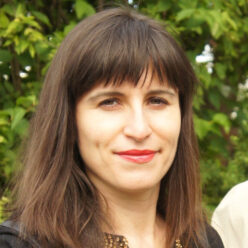
Oksana Maksymchuk was born in Lviv, Ukraine, in 1982. She is the author of two award-winning poetry collections, Xenia and Lovy, in the Ukrainian, as well as a co-editor of Words for War: New Poems from Ukraine, an anthology of contemporary poetry. Her English-language poems appeared in The Paris Review, Ploughshares, PN Review, The Poetry Review and elsewhere. Oksana was a recipient of a National Endowment for the Arts translation fellowship and a winner of Scaglione Prize from the Modern Language Association of America, Peterson Translated Book Award, American Association for Ukrainian Studies Translation Prize, Richmond Lattimore Prize, and Joseph Brodsky/Stephen Spender Prize. She holds a PhD in ancient philosophy from Northwestern University. In recent years, Oksana has been dividing her time between her home in Lviv and various visiting appointments in the United States and Europe.
learn more