Oksana Maksymchuk

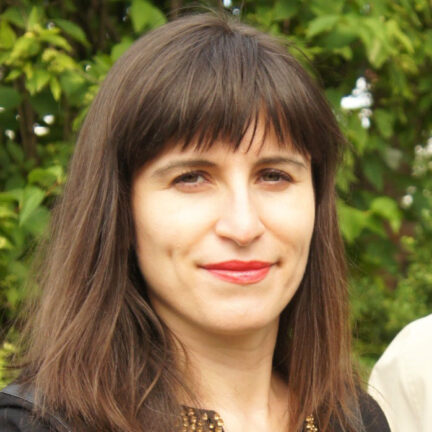
Oksana Maksymchuk was born in Lviv, Ukraine, in 1982. She is the author of two award-winning poetry collections, Xenia and Lovy, in the Ukrainian, as well as a co-editor of Words for War: New Poems from Ukraine, an anthology of contemporary poetry. Her English-language poems appeared in The Paris Review, Ploughshares, PN Review, The Poetry Review and elsewhere. Oksana was a recipient of a National Endowment for the Arts translation fellowship and a winner of Scaglione Prize from the Modern Language Association of America, Peterson Translated Book Award, American Association for Ukrainian Studies Translation Prize, Richmond Lattimore Prize, and Joseph Brodsky/Stephen Spender Prize. She holds a PhD in ancient philosophy from Northwestern University. In recent years, Oksana has been dividing her time between her home in Lviv and various visiting appointments in the United States and Europe.

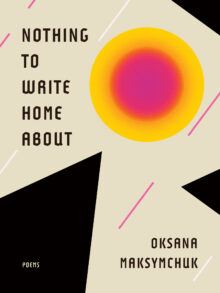
Nothing to Write Home About

Poems

The poems in Oksana Maksymchuk’s new collection explore how different forms of desire are thwarted by proximity to violence and catastrophe, and how they are intensified and enhanced by liminality and mortality. Can love reclaim the territory consumed by war? What does it mean to share in the suffering of others? Are playfulness, sensuality, and pursuit of beauty a cure for numbness, or merely a temporary escape? The collection draws on the genres of reportage, travelogue, family history, and philosophical meditation to make sense of war’s ecstatic, frenzied humanity, the sense of purpose it generates, and the bonds it forges between citizens, family members, and lovers.

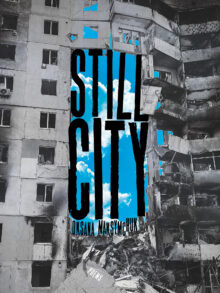
Still City

Poems

Longlist, The 2025 Griffin Poetry Prize | Longlist, 2025 PEN/Voelcker Award for Poetry | One of Financial Times‘s Best Summer Poetry Books of 2024

The poems in Oksana Maksymchuk’s debut English-language collection meditate on the changing sense of reality, temporality, mortality, and intimacy in the face of a catastrophic event. While some of the poems were composed in the months preceding the full-scale invasion of the poet’s homeland, others emerged in its wake. Navigating between a chronicle, a chorus, and a collage, Still City reflects the lived experiences of liminality, offering different perspectives on the war and its aftermath. The collection engages a wide range of sources, including social media posts, the news reports, witness accounts, recorded oral histories, photographs, drone video footage, intercepted communication, and official documents, making sense of the transformations that war effects in individuals, families, and communities. Now ecstatic, now cathartic, these poems shine a light on survival, mourning, and hope through moments of terror and awe.