In the nineteenth century, changes to the environment, driven by ideology, natural forces, and burgeoning fossil fuel power, shifted the course of the Habsburg Empire. Along the Danube—Europe’s second longest river—hydraulic engineering projects ranging from bridges to embankments and shipping hubs affected the river’s dynamics, as ...
The development of nuclear technologies for war, medicine, and energy production dramatically increased the number of people exposed to artificial radioactivity and raised new stakes and questions about protecting them. This volume examines how the establishment of standards and protocols for radiation protection was not only a technical process, but ...
Underneath picturesque views of palm trees, fruity cocktails in hotel lounges, and day trips to preserved colonial zones lies a history of tourism design that intersects with larger projects of development and national and cultural identity formation. Locating modernity and coloniality as the key framework within which tourism development takes ...
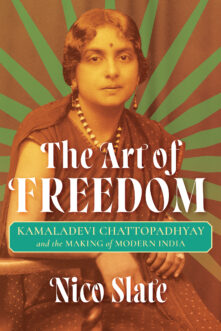
Kamaladevi Chattopadhyay (1903–1988) was a prominent socialist, anticolonial and antiracist activist, champion of women’s rights, and advocate for the arts and crafts. Defying the borders of gender, nation, and race, her efforts spanned social movements and played a leading role in the creation of modern India and the development of ...
While biographers of Andy Warhol have long recognized his mother as a significant influence on his life and art, Julia Warhola’s story has not yet been told. As an American immigrant who was born in a small Carpatho-Rusyn village in Austria-Hungary in 1891, Julia never had the opportunity to develop ...
Winner, The Athenaeum of Philadelphia 2024 Literary Award for Nonfiction
Pennsylvania naturalist William Bartram (1739–1823) is best known as the author of a travelogue describing his botanizing journey through the American South in the late eighteenth century. Writing was not, however, Bartram’s only or even preferred method of recording the natural ...
Flop Era reckons with the complications of being human, and therefore, with the consequences of being fundamentally flawed. It contends with failed potential and the certain uncertainty of the future, while interrogating the past for clues that might explain why, as the speaker bemoans, “there are never enough nails in ...
Exotic drugs and spices, from tea to opium, were among the first fruits of European commercial expansion in the sixteenth century. By the eighteenth, many had become profitable products of the European empires that had spread across the globe. Often, they were objects of appropriation—substances whose curative virtues were ...
Sanitizing Moscow presents an environmental history of public health reforms in late imperial Moscow between 1870 and 1917. It explores the relationship between Russia’s urban modernization and the more-than-human environment in the context of the major social and political changes, triggered by the liberal reforms of the 1860s and 1870s, and ...
No Longer at This Address explores place and the psychology of leaving through the inflammatory lens of the American West. The collection uses the lyric-narrative mode to complicate notions of rootedness and address the ephemerality of where one’s from. The poems visit bison ranches in the Rocky Mountains, converse ...
From the beginning of Galileo’s career, well before the publication of the Sidereus Nuncius, his contemporaries took pains to shape his reputation and fame. They were fully aware that their efforts would shape the course of his career; they also knew that they would profit from helping him. With ...
“I can work best now while peeling potatoes. . . . It is for me what lens-grinding was for Spinoza.”—L. Wittgenstein
More than 250 years separate the publication of Baruch Spinoza’s Ethics and Ludwig Wittgenstein’s Tractatus Logico-Philosophicus. Both are considered monumental philosophical treatises, produced during markedly different times in human history, ...
Winner of the 2024 Donald Hall Prize for Poetry
Part elegy, part poetry of witness, and part poetry of exile, No Rhododendron is a lament to the poet-speaker’s father and fatherland and a grief-wrought love letter to his mother and mother tongue. The collection is haunted by an existential question ...
The world is burning with fire and hatred, but at the same time it is filled with love and incredible beauty. The poems in Burn tango with why the world is so beautiful and terrible at the same time. Hamby asserts that everything is a mess—how do we walk ...
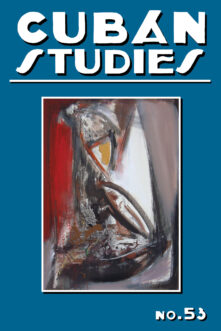
Cuban Studies is the preeminent journal for scholarly work on Cuba. Each volume includes articles in English and Spanish and a large book review section. In publication since 1970, and under Alejandro de la Fuente’s editorial leadership since 2013, this interdisciplinary journal covers all aspects of Cuban history, politics, culture, diaspora, ...