Books

Total 148 results found.

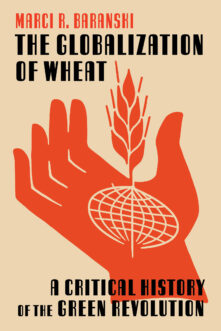
The Globalization of Wheat

The Globalization of Wheat

A Critical History of the Green Revolution
In The Globalization of Wheat, Marci R. Baranski explores Norman Borlaug’s complicated legacy as godfather of the Green Revolution. Winner of the Nobel Peace Prize in 1970 for his role in fighting global hunger, Borlaug, an American agricultural scientist and plant breeder who worked for the Rockefeller Foundation, left a ...
The Correspondence of John Tyndall, Volume 16

The Correspondence of John Tyndall, Volume 16

The Correspondence, January 1878-November 1881

The 500 letters in this sixteenth volume of The Correspondence of John Tyndall document the period from January 1, 1878, to December 31, 1881. They chart a defining stage in the later life and career of an aging John Tyndall with unprecedented detail. Key developments evidence the fragility of a self-fashioned Carlylean hero, one whose ...
From Bionics to Biohybrids

From Bionics to Biohybrids

Bio-Inspired Objects and the Engineering of Life
For centuries, scientists have looked to nature for models when inventing new technologies. This book shows how ideas drawn from biology have inspired new ways of making and thinking—from robots modeled on living organisms to materials that mimic natural processes. Through vivid examples from the twentieth and twenty-first centuries, ...
Disciplinary Connections

Disciplinary Connections

History and Physics in Nineteenth-Century Germany
Disciplinary Connections uncovers the intertwined origins of two fields that shaped nineteenth-century thought: history and physics. Offering the first combined perspective on their development, Sjang ten Hagen reveals a time when these disciplines were seen as parallel modes of knowledge rather than as opposites within the “sciences” and “humanities.” Focusing ...
Old Age, New Science

Old Age, New Science

Gerontologists and Their Biosocial Visions, 1900–1960
Old Age, New Science explores how a group of American and British life scientists contributed to gerontology’s development as a multidisciplinary field. It examines the foundational “biosocial visions” they shared, a byproduct of both their research and the social problems they encountered. Hyung Wook Park reveals how these visions ...
Entangled Itineraries

Entangled Itineraries

Materials, Practices, and Knowledges across Eurasia
Edited by Pamela H. Smith
Trade flowed across Eurasia, around the Indian Ocean, and over the Mediterranean for millennia, but in the early modern period, larger parts of the globe became connected through these established trade routes. Knowledge, embodied in various people, materials, texts, objects, and practices, also moved and came together along these routes ...
News from Mars

News from Mars

Mass Media and the Forging of a New Astronomy, 1860-1910
Mass media in the late nineteenth century was full of news from Mars. In the wake of Giovanni Schiaparelli’s 1877 discovery of enigmatic dark, straight lines on the red planet, astronomers and the public at large vigorously debated the possibility that it might be inhabited. As rivalling scientific practitioners looked ...
Italian Lives, Belgian Coal

Italian Lives, Belgian Coal

An Environmental History of Labor and Migration
On June 23, 1946, Italy and Belgium signed the “men in exchange for coal” agreement, in which Italy committed to sending fifty thousand workers each year to the Belgian coal mines, and Belgium pledged to supply a few thousand tons of coal to Italy each month. The first treaty of its kind, ...
Commemorating Darwin

Commemorating Darwin

Scientific Memory and the Politics of Evolution
Since Charles Darwin’s death in 1882, people across the world have used forms of commemoration and memorialization to celebrate, and at times critique, various aspects of Darwin’s scientific, social, and cultural impact. Commemorative events, activities, and publications marking major anniversaries of Darwin’s birth and death, of the publication ...
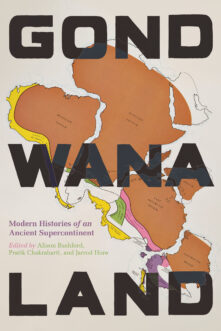
Gondwanaland

Gondwanaland

Modern Histories of an Ancient Supercontinent
The ancient landmass of Gondwanaland began to break up two hundred million years ago into what would become present-day Africa, Antarctica, Australasia, South America, and South Asia—a prehuman “Global South” connected territorially across the southern hemisphere. Named by European geologists in the nineteenth century after the Gondwana region in ...
The Road to Relativity

The Road to Relativity

A Historical Approach to Understanding Einstein's Theory
Albert Einstein transformed our understanding of the universe—but he didn’t do it alone. The Road to Relativity traces the full arc of the relativity revolution, from the overlooked protorelativity period (1880–1905) through Einstein’s 1905 breakthrough and the long road to acceptance into the 1930s. Dan Siegel explains the radical ...
A Science for Everyday Life

A Science for Everyday Life

Mass Media, Natural History, and the Environment in Britain, 1900–1945
A Science for Everyday Life argues that mass media and communications technologies transformed the way British people thought about and experienced the natural world by democratizing knowledge about science and the environment. From progressive educational methods and new modes of museum display to microcinematographic film techniques, new broadcast technologies, and ...
Science Under Adversity

Science Under Adversity

Latin American Medical Researchers of the Early Twentieth Century
Science under Adversity argues that the Global South served as a dynamic arena of scientific innovation, circulation, and international collaboration. In this richly detailed history of the development of Latin American physiology in the early- to mid-twentieth century, Marcos Cueto shows that productive tensions between doctors and scientists in Argentina, ...
The Correspondence of John Tyndall, Volume 15

The Correspondence of John Tyndall, Volume 15

The Correspondence, November 1875–December 1877
The fifteenth volume of The Correspondence of John Tyndall contains 466 letters covering the period from November 1875 to December 1877. Tyndall was by now an established man of science with a far-reaching reputation. The most significant work he undertook in this period involved his experiments on spontaneous generation and his consulting for ...
Wallace in the Field

Wallace in the Field

Ethnographic Expeditions and the Rise of Anthropology
A man of many talents—naturalist, geographer, anthropologist, and political commentator—Alfred Russel Wallace made seminal contributions to science in the nineteenth century. With Wallace in the Field, Victor Rafael Limeira-DaSilva unpacks the early life of one of the most beloved and famous Victorian scientific figures. Focusing on Wallace’s ...

Total 148 results found.