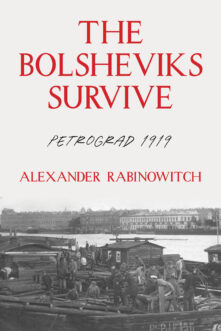
Petrograd, the imperial capital and the urban stage upon which virtually the entire Russian Revolution was enacted, in 1919 struggled through a year of civil war, hunger, social upheaval, and political and economic challenges. Based on exhaustive research in previously closed Russian archives, Alexander Rabinowitch authoritatively presents an in depth look ...
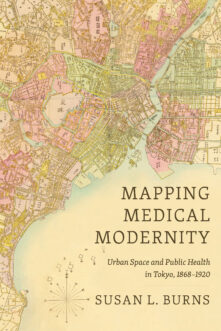
Mapping Medical Modernity explores the history of medical modernization and public health in late nineteenth- and early twentieth-century Tokyo, a city undergoing rapid transformation from the seat of power of the Tokugawa shoguns of the Edo period to the capital of a modern nation-state and its expanding empire in the ...
The words teachers write on student work have the power to help students think critically and to hone and project their voices with confidence. They also have the power to shut students down. These words may affect student identity, motivation, and improvement of writing skills. Research suggests that many of ...
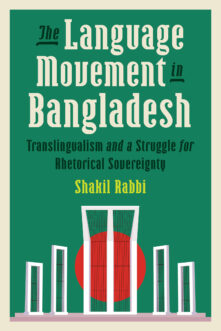
The Language Movement in Bangladesh charts the Bangla Language Movement from a rhetorical perspective. Following Partition in 1947, major conflicts over land, religion, power, and language characterized the newly independent nations of India and Pakistan. The debate over recognizing Bangla as a state language in East Pakistan was particularly consequential. Lasting ...
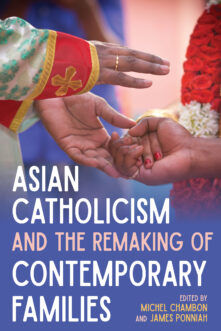
Foreword by José CasanovaAsian Catholicism and the Remaking of Contemporary Families attends to the ways in which Asian Catholics navigate and negotiate the ethical ideals, normative discourses, and devotional practices of their religion as they construct and reconstruct their understandings of the family in contemporary society. In addition to family ...
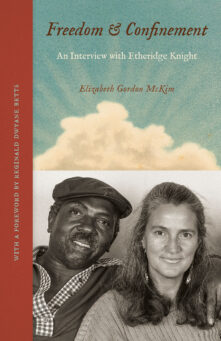
Freedom and Confinement is a powerful, book-length conversation between poets Elizabeth Gordon McKim and Etheridge Knight, recorded in 1990 as Knight was dying of cancer. The interview traces Knight’s life from his childhood in Paducah, Kentucky, to his time in the Army and his injury in Korea, to his drug ...
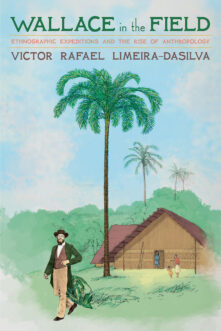
A man of many talents—naturalist, geographer, anthropologist, and political commentator—Alfred Russel Wallace made seminal contributions to science in the nineteenth century. With Wallace in the Field, Victor Rafael Limeira-DaSilva unpacks the early life of one of the most beloved and famous Victorian scientific figures. Focusing on Wallace’s ...
The 500 letters in this sixteenth volume of The Correspondence of John Tyndall document the period from January 1, 1878, to December 31, 1881. They chart a defining stage in the later life and career of an aging John Tyndall with unprecedented detail. Key developments evidence the fragility of a self-fashioned Carlylean hero, one whose ...
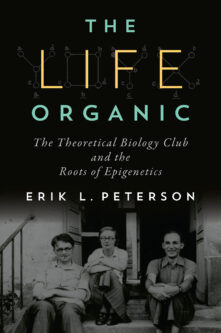
As scientists debated the nature of life in the nineteenth century, two theories predominated: vitalism, which suggested that living things contained a “vital spark,” and mechanism, the idea that animals and humans differed from nonliving things only in their degree of complexity. Erik L. Peterson tells the forgotten story of ...
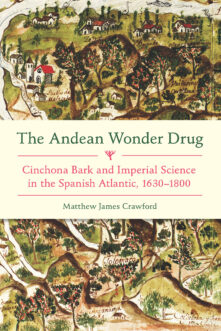
In the eighteenth century, malaria was a prevalent and deadly disease, and the only effective treatment was found in the Andean forests of Spanish America: a medicinal bark harvested from cinchona trees that would later give rise to the antimalarial drug quinine. In 1751, the Spanish Crown asserted control over the ...
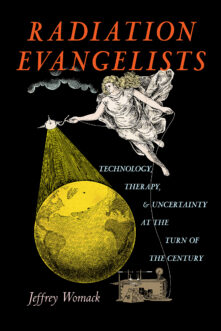
Radiation Evangelists explores X-ray and radium therapy in the United States and Great Britain during a crucial period of its development, from 1896 to 1925. It focuses on the pioneering work of early advocates in the field, the “radiation evangelists” who—motivated by their faith in a new technology, trust in new ...
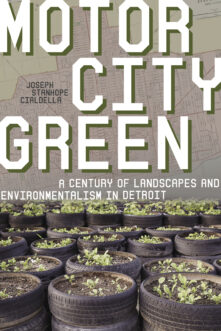
Winner, 2021 CCL J. B. Jackson Book Prize | Winner, 2020 Jon Gjerde Prize from the Midwestern History Association
Motor City Green is a history of green spaces in metropolitan Detroit from the late nineteenth to the early twenty-first century that focuses on the creation and use of parks, gardens, yards, and other ...
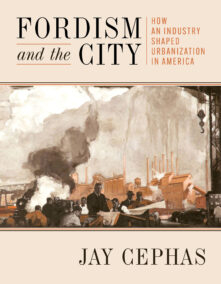
In the early twentieth century, the Ford Motor Company built an industrial empire with massive factory complexes and associated infrastructures. Henry Ford’s 1915 plan to decentralize industrial manufacturing relied on moving key technical processes closer to sites of resource extraction while distributing elements of production. In Fordism and the City, ...
Modern Paris is often hailed as a capital of urban infrastructure. Baron Georges-Eugène Haussmann’s rebuilding of Paris in 1853–1870, branded “Haussmannization,” helped define urban modernity for cities worldwide. But even as infrastructures expanded and modernized, some Parisians were left behind: as late as 1928, 18 percent of houses still lacked direct ...
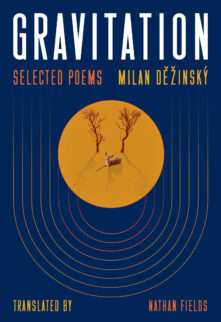
Translated by Nathan Fields
The selected poetry of Milan Děžinský, translated by Nathan Fields, including many poems previously not published in English by the celebrated Czech poet.