Books

Total 117 results found.

Encountering US Empire in Socialist Venezuela

Encountering US Empire in Socialist Venezuela

The Legacy of Race, Neo-Colonialism, and Democracy Promotion
Since the end of World War II, the United States has come to dominate the world economically and politically, leading many to describe the United States as an empire. Scholars have analyzed how the US government has worked through international financial institutions, its Central Intelligence Agency, and outright warfare to ...
Claiming Brazil

Claiming Brazil

Performances of Citizenship in the Centenary of Independence
Brazil marked its centennial as an independent country in 1922. Claiming Brazil explores how Brazilians from different walks of life commemorated the event, and how this led to conflicting ideas of national identity. Civic rituals hold enormous significance, and Brazilian citizens, immigrants, and visitors employed them to articulate and perform their ...
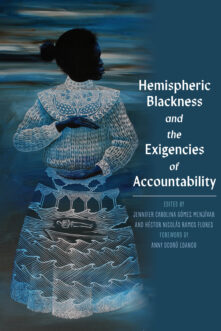
Hemispheric Blackness and the Exigencies of Accountability

Hemispheric Blackness and the Exigencies of Accountability

Hemispheric Blackness and the Exigencies of Accountability examines the way Afrodescendant and Black communities use the land on which they live, the rule of law, and their bodies to assert their historical, ontological, and physical presence across South, Central, and North America. Their demand for the recognition of ancestral lands, ...
Voices, Visions, and a New Reality

Voices, Visions, and a New Reality

Mexican Fiction Since 1970
This book introduces to a larger audience the work of a group of Mexican writers whose work reflects the stimulus of the “boom” of the 1960s, especially in the experimental nueva novella. Duncan views the work of six writers in the context of more well known writers of the period (...
The Film Industry in Brazil

The Film Industry in Brazil

Culture and the State
Looking back through the prism of the severe economic crisis for filmmaking in the 1980s, The Film Industry in Brazil explores the unusual relationship between the state-supported industry, which often produced politically radical films, and the authoritarian regime that had held sway for twenty years. To ground his analysis, Johnson ...
Restructuring Domination

Restructuring Domination

Industrialists and the State in Ecuador
The industrial development of Ecuador has made fortunes for some, but has largely bypassed the general population. Armed by its new power, the bourgeoisie has captured sate mechanisms for its own advancement, leading to the paradox of a “democratic authoritarianism.” In this study, Catherine M. Conaghan views the crucial differences ...
The Social Documentary in Latin America

The Social Documentary in Latin America

Twenty essays by major filmmakers and critics provide the first survey of the evolution of documentary film in Latin America. While acknowledging the political and historical weight of the documentary, the contributors are also concerned with the aesthetic dimensions of the medium and how Latin American practitioners have defined the ...
The Expulsion of Mexico’s Spaniards, 1821-1836

The Expulsion of Mexico’s Spaniards, 1821-1836

Winner of the Arthur P. Whitaker Prize as “the best book in Latin American Studies in 1990-1991 Mexico's colonial experience had left a bitter legacy. Many believed that only the physical removal of the old colonial elite could allow the creation of a new political and economic order. While ...
Cuba under the Platt Amendment, 1902–1934

Cuba under the Platt Amendment, 1902–1934

• Choice 1987 Outstanding Academic Book This book examines the early years of the Cuban Republic, launched in 1902 after the war with Spain. Although no longer a colony, the country was still hobbled by continuing dependence on and exploitation from a foreign power. Pérez shows how U.S. armed ...
The Meaning Of Freedom

The Meaning Of Freedom

Economics, Politics, and Culture after Slavery
In this interdisciplinary study, scholars consider the aftermath of slavery, focusing on Caribbean societies and the southern United States. What was the nature and impact of slave emancipation? Did the change in legal status conceal underlying continuities in American plantation societies? Was there a common postemancipation pattern of economic development? ...
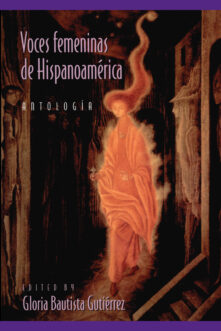
Voces Femeninas de Hispanoamerica

Voces Femeninas de Hispanoamerica

Edited by Gloria Bautista
Voces Femeninas de Hispanoamerica presents in one volume a selection of the most representative and outstanding writing by Latin American women writers from the seventeenth century to the present. Designed as a text for third and fourth-year students, the selections, writers’ biographies, historical introduction, and appendixes are entirely in Spanish, ...
A Forced Agreement

A Forced Agreement

Press Acquiescence to Censorship in Brazil
During much of the military regime in Brazil (1964-1985), an elaborate but illegal system of restrictions prevented the press from covering important news or criticizing the government. In this intriguing new book, Anne-Marie Smith investigates why the press acquiesced to this system, and why this state-administered system of restrictions was ...
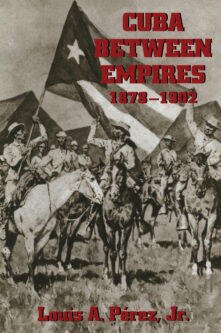
Cuba between Empires, 1878-1902

Cuba between Empires, 1878-1902

Cuban independence arrived formally on May 20, 1902, with the raising of the Cuban flag in Havana – a properly orchestrated and orderly inauguration of the new republic. But something had gone awry. Republican reality fell far short of the separatist ideal. In an unusually powerful book that will appeal to the general ...
Imagination Beyond Nation

Imagination Beyond Nation

Latin American Popular Culture
Can scholarly pursuit of soap operas and folk art actually reveal a national imagination? This innovative collection features studies of iconography in Mexico, telenovelas in Venezuela, drama in Chile, cinema in Brazil, comic strips and tango in Argentina, and ceramics in Peru. In examining these popular arts, the scholars gathered ...
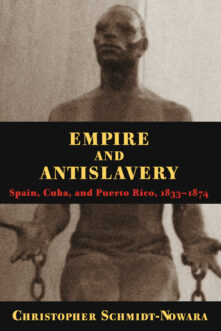
Empire And Antislavery

Empire And Antislavery

Spain Cuba And Puerto Rico 1833-1874
In 1872, there were more than 300,000 slaves in Cuba and Puerto Rico. Though the Spanish government had passed a law for gradual abolition in 1870, slaveowners, particularly in Cuba, clung tenaciously to their slaves as unfree labor was at the core of the colonial economies. Nonetheless, people throughout the Spanish empire fought ...

Total 117 results found.